[Really this ode came through in stages. First at 1:54pm, then again at 2:20pm, then I looked at it for 15 minutes trying to decide if I wanted to add punctuation — since originally it had almost none. And one line “The way I see it, every story is interesting so long as it’s lived” metamorphed many times. It still changes shape before me. The “true” dictated form (2:20pm version) was simply “Every story is interesting so long as it’s lived”, but the original 1:54pm version prefaced with “The way I see it --”. At 2:31 it shifted to “The way I see it,” — but then, how to fit the line? Just now I copied the final 2:35pm version below, but it was overlaid in my vision with the 2:20pm, second~first version. So, I decide — ah, go back to the middle, honor it, preserve it, choose it. We can choose to unequip our requipments. Go back to the pre~requipment~ ] Received 12/13/2025 | 2:20-21pm
PREREQUIPMENT Live life without prerequisites— Every story is interesting so long as it’s lived There are no REAL universal prerequisites Each story has its own prerequisites, which Can not be known until they’ve been lived So, live as if you don’t have any And later, realize which ones you had
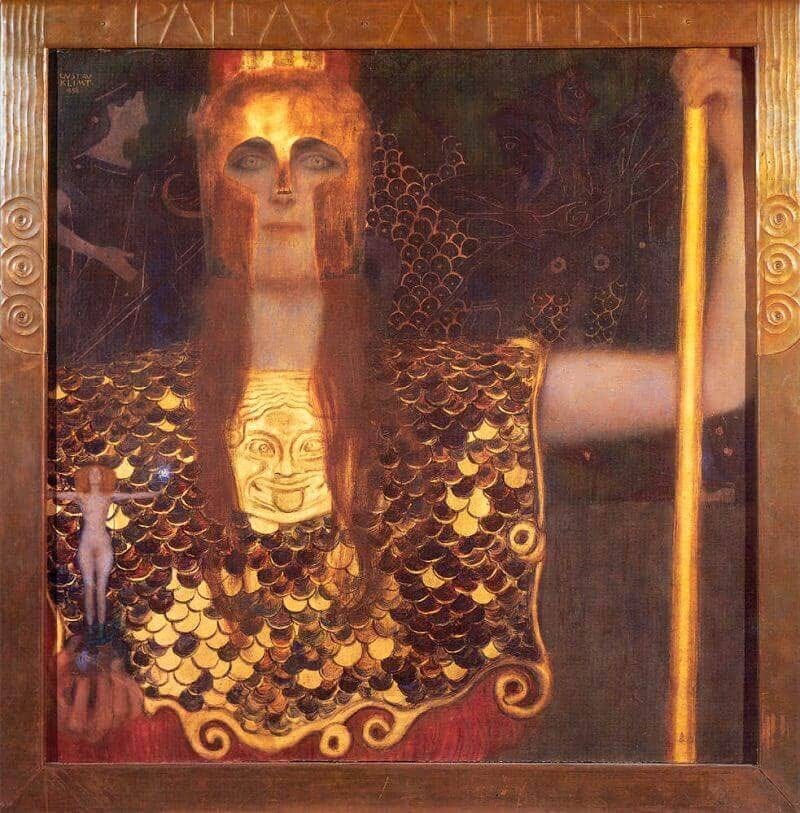
Gustav Klimt, Pallas Athene (1898)
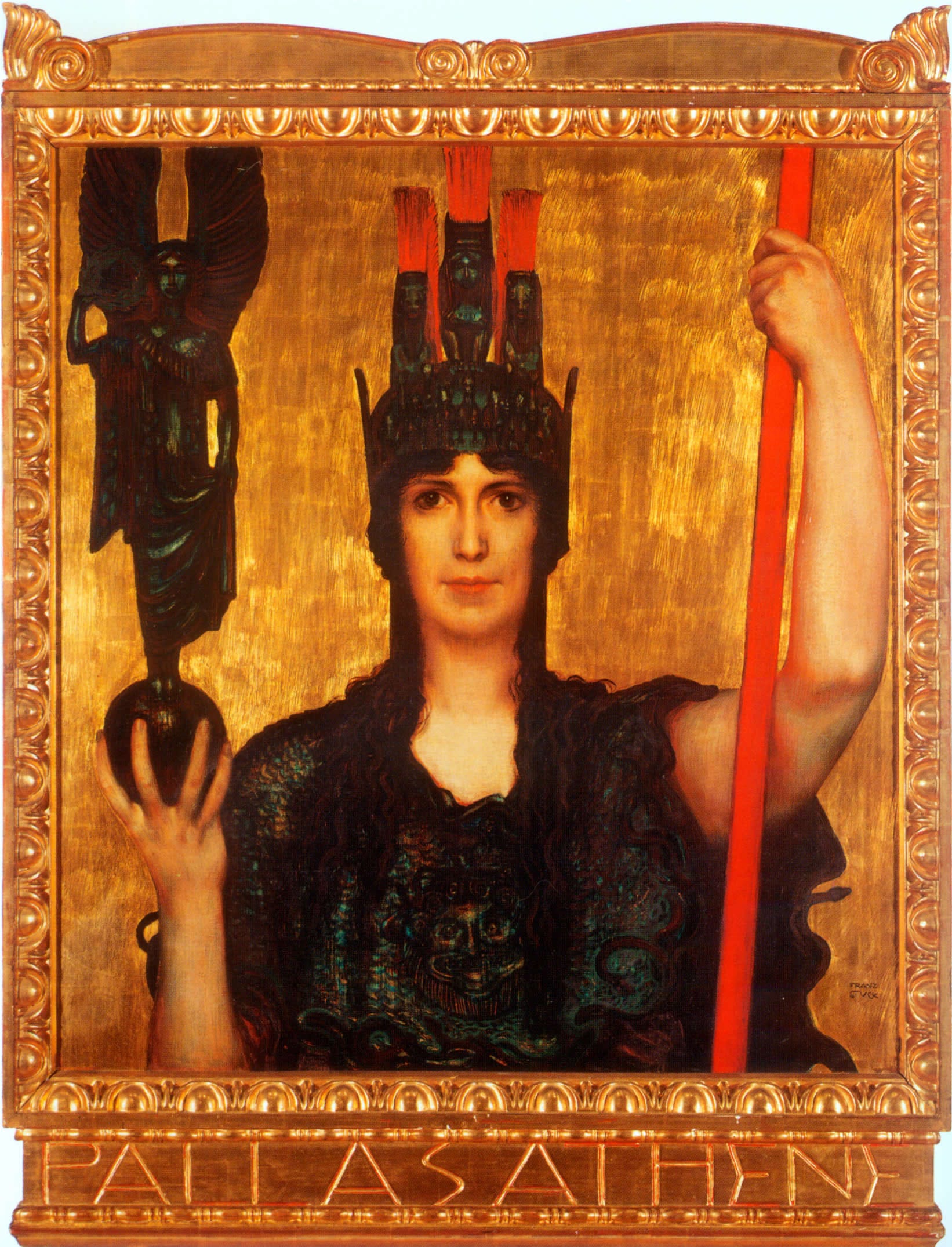
Franz von Stuck, Pallas Athene (1898) — Isn’t the conversation between Klimt and von Stuck striking? Munich and Vienna were both at this time in aesthetic secession from their art academes, and their respective artists were in active conscious (and unconscious) communication. Athena was symbolic shorthand for intellectual sovereignty, aesthetic militancy, anti-academic authority. Erupting from the head of Zeus, fully armed, fully equipped. Hephaestus (craft, artisan) helped precipitate the emergence by striking Zeus with an axe. The secessionists (Munich in 1892; Vienna in 1897) were energized by Pallas Athene as a figure to bolster their cause. Masculine hero myths were cracking. Female intellectual might was threatening established structures. Nietzsche was widely read. Wagner and Freud were looming. Much was about to change in this fin de siècle. And so Athena carried the message: authority without lineage, readiness without training, armor without backstory. Looking back — “Oh — that is what was required.” We come to know after the fact. Klimt’s Athena says we are armed against the academy; von Stuck’s says authority does not need ornament. They are providing syndetic (simultaneous cluster of signs forming a unified gesture) arguments against the same institutions. The two form a poem~binocular. Today they emerge here together again~
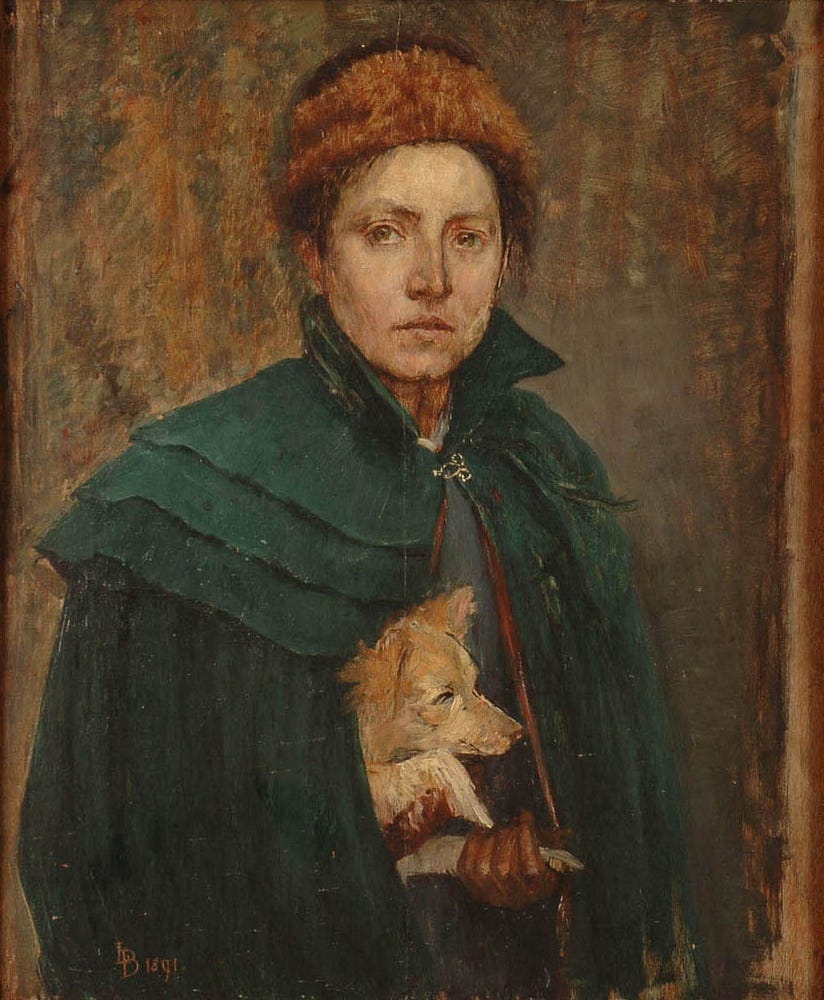
Louise Breslau, Selbstporträt (1891) — Breslau lived and worked with an amazing group of artist friends: Sophie Schaeppi and Maria Feller, as well as Sarah Purser, Jenny Zillhardt, and Madeleine Zillhardt. They are all worthy of your time.
Odilon Redon, The Mystical Knight (Oedipus and the Sphinx) (1869).
Un, pre, re -- each worthy of evaluation of appreciation. Thank you for always inviting and challenging me to investigate and interrogate our language 🫶🏼



Un, pre, re -- each worthy of evaluation of appreciation. Thank you for always inviting and challenging me to investigate and interrogate our language 🫶🏼